

Introduction
The development of an ecosystem, which consists of changes in species structure and biocenotic processes over time, is called ecological succession (Odum, 1983). Succession occurs as a result of changes in the physical environment and interactions at the population level. Succession – a directed and continuous sequence of the appearance and disappearance of populations of different species in a given habitat (Begon et al., 1996). In the most general sense, succession refers to the process of community development. Successional changes in communities are linked to varying degrees to factors that are external and internal to the community (Whittaker, 1975). An important factor in the study of aquatic ecosystem succession is the lack of criteria by which to determine the succession status of individual biocenoses. This is important for determining the course of succession in time and space and the rate of biocenotic change. Biocenoses are developing systems that transition from one qualitative state to another under the influence of both external factors and changes in the interactions between the components of the biocenosis. Zooplankton communities are no exception.
Zooplankton consumes bacteria and phytoplankton, which serve as its key food resources. In river ecosystems, zooplankton makes a substantial contribution to material cycling and energy flow. As a primary consumer, it is capable of regulating the abundance of both producers and consumers at subsequent trophic levels through cascading effects. Due to its high sensitivity to changes in habitat conditions, zooplankton abundance, diversity, and biomass can serve as reliable indicators of the condition of river ecosystems (Goździejewska et al., 2024; Kong et al., 2026).
Zooplankton communities are subject to pronounced seasonal fluctuations under the influence of biotic and abiotic factors. Among the environmental variables associated with this dynamics are water temperature, nutrient concentrations, transparency, dissolved oxygen, and others (Ni et al., 2025; Hu et al., 2019). Regional climatic characteristics, including precipitation and air temperature, also affect the structure and functioning of zooplankton communities (Liu et al., 2023).
The study of seasonal patterns in community structure requires long-term studies that simultaneously take into account both species diversity and environmental variability. Since zooplankton occupies a central position in aquatic food webs and participates in energy transfer across trophic levels, it is important to understand how environmental variability mediates the relationships between physical processes and zooplankton dynamics (Liu et al., 2023). A deeper understanding of the factors ensuring species coexistence in dynamic communities is necessary to assess the short- and long-term consequences of global change for ecosystem functioning (Jiang et al., 2026).
A number of studies show that population fluctuations are determined by both general and species-specific responses to environmental variability (ecological stochasticity), as well as by differences in the basic ecology of species (ecological heterogeneity). These differences are reflected in the functional roles of species within communities. Ecological heterogeneity arises from interspecific differences. Population growth, reproduction, and demographic characteristics are determined by phenotypic traits, which are formed as a result of the adaptation of organisms to specific biotic and abiotic conditions (Litchman, Klausmeier, 2008; Bellier et al., 2022; Ni et al., 2025; Jiang et al., 2026).
The structure of communities is most often analyzed based on the characteristics of individual short time series or one-time hydrobiological sampling. Such studies often address only individual components of communities (Fisher et al., 1943; Matthews, Whittaker, 2015), and ignore environmental factors and functional diversity metrics. Meanwhile, environmental factors underlie the dynamics of zooplankton communities (Henderson, Magurran, 2010; Matthews, Whittaker, 2015).
This study analyzes the influence of seasonality and environmental factors on community dynamics and fluctuations in species diversity in the mouth area of a large river (using the example of the Oka River (a tributary of the Volga River) in the European part of Russia).
Material and methods
Study area
The Oka River is a large river (length 1500 km, catchment area 245000 km², average annual water flow in the lower reaches 1258 m³/s) in the European part of Russia and one of the largest tributaries of the Volga River. The climate of the catchment area is continental-temperate and similar to that of the middle Volga. The population density in the river basin is 113 people/km². A large industrial center, the city of Nizhny Novgorod, is located at the confluence of the Oka and Volga rivers. The river regime of the Oka is characterized by pronounced spring floods, as well as summer and winter low water levels with periodic floods caused by rains. The average annual water consumption in the lower reach ranges from 0.98 to 600 m³/s. Since the late 20th century, water mineralization has risen 1.6-fold, sulfate concentrations have increased, and alkaline earth metals have also become more abundant. At the same time, water color, dissolved carbon dioxide, organic matter and total phosphorus have all declined. Together, these shifts indicate that waters in the lower reaches of the Oka River are changing from the bicarbonate class to the bicarbonate-sulfate class. The river’s mouth area continues to be classified as eutrophic–hypertrophic, with a high level of anthropogenic pressure (Rivers of Europe, 2022).
Sample collection and identification
Zooplankton samples were collected in the mouth area of the Oka River (56°19′45″ N, 43°58′35″ E) once a week from December 2, 2024, to November 24, 2025, thus covering all seasons (winter, spring, summer, and autumn). A total of 51 zooplankton samples were collected. Samples were collected using a 6-L Van Dorn sampler (Aquatic BioTechnology, Spain) and passed through a 67-µm plankton net. All samples were concentrated to 100 mL and fixed with 40% formalin. Samples were examined by light microscopy for organism identification, counting, and measurement, as well as for determining zooplankton density and calculating biomass. Zooplankton samples were examined using a Zeiss Stemi 2000C stereomicroscope (Carl Zeiss Micr., Germany) and an Olympus CX43 light microscope (Olympus Corp., Japan). Taxonomic identification of zooplankton was performed using appropriate identification keys and taxonomic guides (Hudec, 2010; Błędzki, Rybak, 2016, Korovchinsky et al., 2021).
Determination of water environmental factors
Water temperature, electrical conductivity, pH, chlorophyll-a concentration, and dissolved oxygen were measured on site using the AquaRead AP-2000 multiparameter water quality analyzer (Aquaread Ltd., United Kingdom). The atmospheric precipitation (AP) was taken from obtained from publicly available weather data one day before sampling.
Statistical analysis
The following indicators of community structure were used: species richness, diversity, and evenness of species distribution. Species richness was expressed in terms of the number of species. Diversity and evenness of species distribution were analyzed using Shannon (H) and Pielou (E) indices (Legendre, Legendre, 2012).
Functional richness (FRic) was calculated using a database of functional traits of freshwater zooplankton from the Middle Volga basin (Gavrilko et al., 2021). Functional space was defined by principal coordinate analysis based on Gower distances between species. Functional richness (FRic) quantifies the total volume of functional space occupied by species in a given community and reflects the degree of spatial resource use. It is calculated as the volume of a multidimensional convex hull (Villéger et al., 2008).
Total abundance and biomass and abundances of taxonomic groups of zooplankton were log-transformed before analysis to better fit a normal distribution.
The relationship between abiotic and biotic environmental factors and the species structure of zooplankton communities was analyzed using redundancy analysis (RDA), and the significance of the models was tested by a permutation test (1000 permutations) (Borcard et al., 2011; Legendre, Legendre, 2012). Normality was assessed using the Shapiro-Wilk test, homogeneity of variances using Levene’s test, and group differences using Welch’s t-test or the Wilcoxon test; multiple comparisons were controlled using the Westfall-Young correction. The effects of environmental factors on zooplankton abundance, biomass, species richness, species diversity, and functional richness were tested using linear regression models and ANOVA. All analyses were performed in R (version 4.5.2; packages “vegan”, “FD”) (R Core Team, 2026).
Results
Species composition of zooplankton
In total, 62 zooplankton species were identified in the mouth area of the Oka River. Among them, 36 species were rotifers (58.1%), 18 were cladocerans (29.0%), and 8 were copepods (12.9%). Hierarchical clustering was performed based on species composition, and a dendrogram was constructed (Fig. 1B). In the dendrogram, all zooplankton samples formed four clusters corresponding to the four seasons (winter, spring, summer, and autumn). A Venn diagram based on the species composition of the four seasons (Fig. 2A) showed that 15 species were common to all seasons. The largest number of unique species (9 species) was found in summer (Fig. 2A).
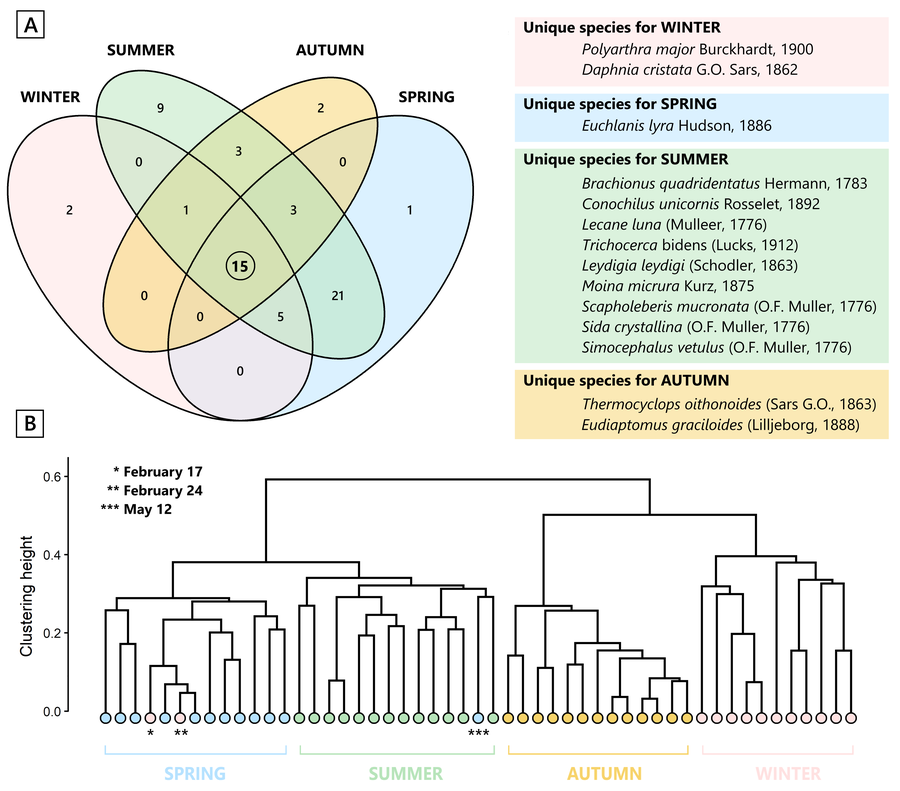
Figure 1 – Venn diagram of zooplankton species of different seasons (A) and dendrogram of hierarchical clustering based on the species composition of zooplankton (В) of the Oka River
Analysis of the distribution of species from different taxonomic groups across different seasons of the year showed that overall species richness, as well as the species richness of rotifers and crustaceans, was highest in summer and lowest in winter (Fig. 2).
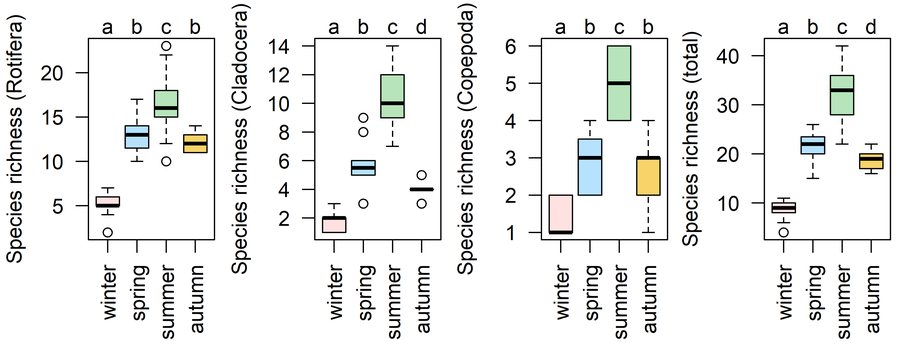
Figure 2 – Boxplots of the species richness of different seasons of the Oka River. Compact letter designations were added to indicate significant differences
The species richness of rotifers and copepods did not differ in spring and autumn (Fig. 2). The species richness of cladocerans and the total species richness of zooplankton did not vary greatly, but there were statistically significant differences (Fig. 2).
Zooplankton abundance and biomass
The abundance and biomass of zooplankton varied significantly between seasons (Fig. 3). In winter, rotifers accounted for an average of 18.2±1.5 % of the abundance and 10.6±0.6 % of the biomass of zooplankton. Crustaceans formed the basis of zooplankton in terms of both abundance and biomass (Table 1). In general, the quantitative development of all taxonomic groups was lowest in winter (Fig. 3).
Table 1 – The share of taxonomic groups in the total abundance and biomass of zooplankton of the Oka River
| Indicators | winter | spring | summer | autumn | |
|---|---|---|---|---|---|
| Abundance, % | Rotifera | 18.2±1.5 | 24.7±2.0 | 32.0±1.2 | 17.7±3.0 |
| Cladocera | 32.6±3.6 | 43.7±3.7 | 37.4±0.8 | 4.8±1.1 | |
| Copepoda | 49.2±4.9 | 31.6±2.0 | 30.6±1.1 | 77.4±4.0 | |
| Biomass, % | Rotifera | 10.6±0.6 | 1.0±0.1 | 4.5±0.3 | 5.1±1.2 |
| Cladocera | 58.2±5.2 | 58.5±3.5 | 45.3±1.2 | 10.4±3.3 | |
| Copepoda | 31.2±5.6 | 40.6±3.4 | 50.2±1.4 | 84.5±4.4 | |
The greatest quantitative development of all zooplankton taxonomic groups was observed in spring and summer (Fig. 3). The proportion of rotifers in the total zooplankton abundance in spring and summer was relatively large, amounting to 24.7±2.0 % and 32.0±1.2 %, respectively (Table 1). The proportion of rotifers in the total biomass in spring and summer was extremely low, amounting to 1.0±0.1 % and 4.5±0.3 %, respectively. Crustaceans continued to form the basis of the abundance and biomass of zooplankton (Table 1).
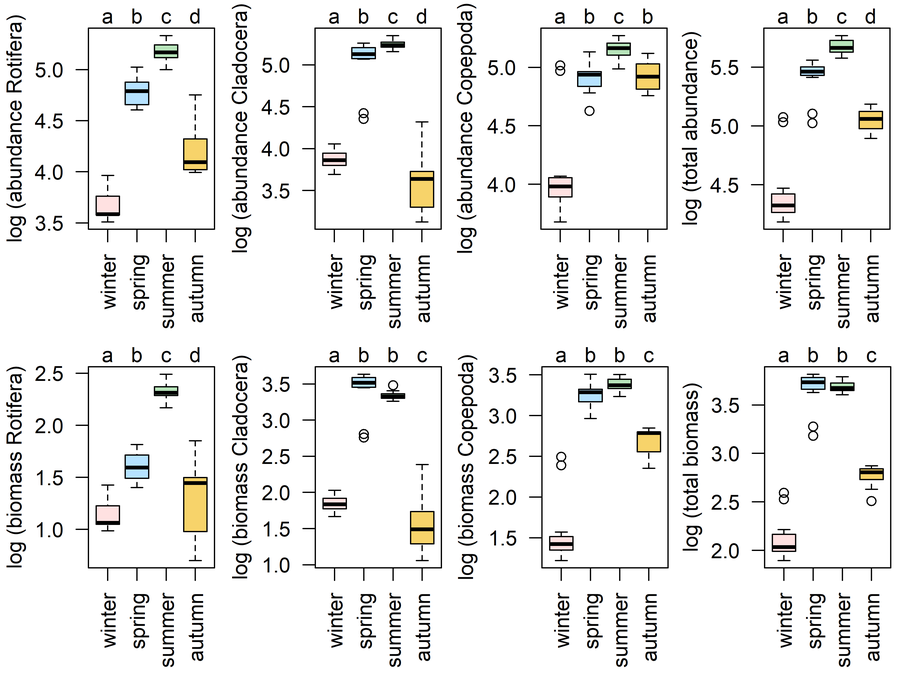
Figure 3 – Boxplots of the structural indicators of different seasons of the Oka River. Compact letter designations were added to indicate significant differences. Abundance and biomass of zooplankton were logarithmic before analysis to better fit a normal distribution
Zooplankton diversity was highest in summer (Fig. 4). However, the pattern of Pielou evenness index values differed (Fig. 4). In summer, the zooplankton community had the lowest evenness, while in winter and autumn the Pielou evenness index values were highest (Fig. 4).
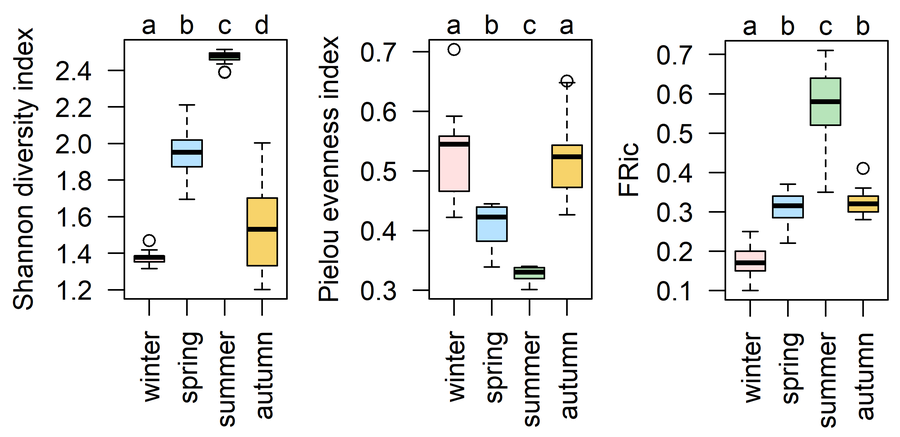
Figure 4 – Boxplots of the structural indicators of different seasons of the Oka River.
Compact letter designations were added to indicate significant differences
The pattern of functional richness index (FRic) values was similar to that of the diversity index (Fig. 4). In summer, FRic values were significantly higher than in other periods. The lowest FRic value was recorded in winter (Fig. 4).
Zooplankton community structure and environmental variables
Redundancy analysis (RDA) was applied to test each environmental factor separately and to identify its association with the species structure of zooplankton communities across the study periods (Table 2). Among all factors examined, only water temperature, pH, chlorophyll-a, and atmospheric precipitation significantly explained changes in plankton community structure (p < 0.05). When considered individually, water temperature and chlorophyll-a concentration were the principal factors, accounting for 23.88% and 24.56% of the total variance in zooplankton community structure, respectively. The remaining factors had a weaker influence on plankton community structure.
Table 2 – Permutation test results for RDA models, constructed for each variable
| Environmental factors | R2 | Pseudo-F | Р |
|---|---|---|---|
| Water temperature (WT) | 23.88% | 16.69 | 0.001* |
| Electrical conductivity (EC) | 0.007% | 1.03 | 0.374 |
| pH | 8.74% | 5.79 | 0.002* |
| Chlorophyll-a (CHL) | 24.56% | 17.28 | 0.001* |
| Dissolved oxygen (DO) | 1.95% | 3.05 | 0.065 |
| Atmospheric precipitation (AP) | 6.53% | 4.49 | 0.002* |
The full model, including all factors, significantly explained 36.39 % of the total variance (Fig. 5A). The main part of the variance was represented along the axis RDA1 (24.1 %), but both horizontal and vertical axes are significant (p-value < 0.01). Samples from different seasons (zooplankton communities) grouped well on the RDA plot (Fig. 5A).
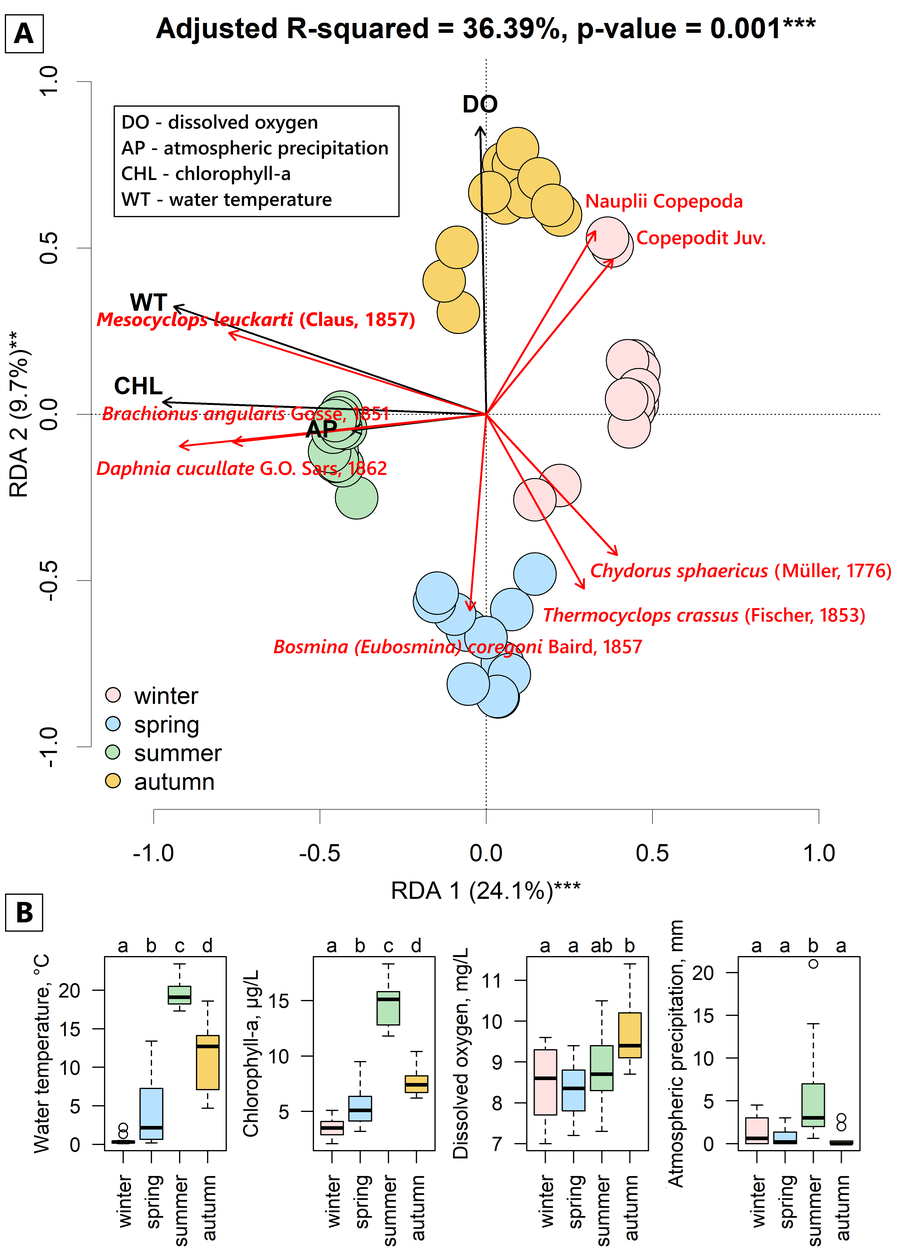
Figure 5 – Redundancy analysis (RDA) plot with dominant zooplankton taxa (А) and boxplots of the pattern of environmental factors of different seasons (В) with compact letter designations were added to indicate significant differences
In summer, water temperature (WT), chlorophyll-a (CHL), and atmospheric precipitation (AP) were higher. Dissolved oxygen (DO) content was highest in the autumn period (Fig. 5A,B).
We also added the vectors for dominant taxa to the RDA plot (Fig. 5A). This shows that plankton communities had significantly different species structures in different seasons. In winter, the dominant taxa were nauplii (36.3 % of the total zooplankton abundance) and copepodites (27.3 %) of crustaceans, as well as the cladoceran Chydorus sphaericus (Müller, 1776) (20.2 %). The abundance of C. sphaericus was moderately negatively correlated with water temperature (Fig. 5A). In spring, the dominant taxa were the cladoceran Bosmina (Eubosmina) coregoni Baird, 1857 (33.6 %) and the copepod Thermocyclops crassus (Fischer, 1853) (16.5 %). The abundance of these dominant species was negatively correlated with dissolved oxygen content in the water (Fig. 5A). In summer, the complex of dominant taxa was the richest: the copepod Mesocyclops (Mesocyclops) leuckarti (Claus, 1857) (13.6 %), the cladoceran Daphnia (Daphnia) cucullata Sars, 1862 (13.0 %), and the rotifer Brachionus angularis Gosse, 1851 (11.3 %). The abundance of B. angularis and D. cucullata correlated strongly with the atmospheric precipitation. The abundance of M. leuckarti correlated strongly with water temperature (Fig. 5A). In autumn, the dominant taxa were only the nauplii (35.0 %) and copepods stages (34.2 %). The quantitative development of these taxa in autumn was weakly correlated with the dissolved oxygen content in the water (Fig. 5A).
Overall, water temperature, chlorophyll-a concentration, and precipitation were the leading factors in summer period, while dissolved oxygen concentration was the leading factor in the autumn period (Fig. 5A).
We analyzed the dependence of total abundance and biomass, species richness, species diversity, and functional richness on environmental factors (water temperature, chlorophyll-a, dissolved oxygen and atmospheric precipitation) (Table 3). The strongest positive correlation was found between functional richness and chlorophyll-a content (Adj. R2 = 0.89, p-value < 0.001) and water temperature (Adj. R2 = 0.83, p-value < 0.001) (Table 3).
Table 3 – Results of regression analysis between total abundance, total biomass, species richness, species diversity, functional richness and environmental parameters
| Predictor | Statistics | Total abundance | Total biomass | Species Richness | Shannon Diversity Index | FRic |
|---|---|---|---|---|---|---|
| WT | Adjusted R2 | 0.69 | 0.55 | 0.75 | 0.68 | 0.83 |
| p-value | <0.001 | <0.001 | <0.001 | <0.001 | <0.001 | |
| CHL | Adjusted R2 | 0.71 | 0.60 | 0.79 | 0.79 | 0.89 |
| p-value | <0.001 | <0.001 | <0.001 | <0.001 | <0.001 | |
| DO | Adjusted R2 | 0.04 | −0.08 | 0.09 | −0.06 | 0.17 |
| p-value | 0.78 | 0.56 | 0.54 | 0.67 | 0.23 | |
| AP | Adjusted R2 | 0.23 | 0.23 | 0.38 | 0.42 | 0.43 |
| p-value | 0.11 | 0.10 | <0.01 | <0.01 | <0.01 |
Overall, water temperature and chlorophyll-a showed positive correlations (p-value < 0.001) with total zooplankton abundance, total biomass, species richness, species diversity, and functional richness. Species richness, species diversity, and functional richness were also positively correlated with precipitation (p-value < 0.01). None of the zooplankton community indicators examined showed a statistically significant relationship with dissolved oxygen content in the water.
Discussion
A total of 62 zooplankton species were found in this study, most of which were cosmopolitan and typical for watercourses in the European part of Russia (Mukhortova et al., 2021; Lobunicheva et al., 2023; Zhikharev et al., 2023). Three alien species were identified: the North American rotifer Kellicottia bostoniensis (Rousselet, 1908) (found in all study periods), the Ponto-Caspian copepod Eurytemora caspica Sukhikh & Alekseev, 2013 (found only in spring and summer), and the Mediterranean copepod Calanipeda aquaedulcis Krichagin, 1873 (found only in spring and summer). K. bostoniensis has long been distributed in various types of water bodies and watercourses in Europe (Shurganova et al., 2021; Hong et al., 2025; Sługocki, Czerniawski, 2025) and does not pose an economic or ecological threat to the native fauna. Until recently, the copepods E. caspica and C. aquaedulcis had not been found in the Cheboksary Reservoir basin (Lazareva, 2019; Tarasova et al., 2025). However, C. aquaedulcis was recently detected for the first time in the Oka River basin (Zhikharev et al., 2025). At this stage of colonization, both species do not pose an economic or environmental threat, but their mass development could lead to changes in local plankton communities.
In this study, seasonal changes in zooplankton species composition are consistent with similar studies in other regions of Europe (Vadadi-Fülöp, 2009; Bernát et al., 2020). This indicates that seasonal succession manifests itself at the species composition level and occurs against the backdrop of changing environmental factors.
At the species level, all collected samples were clustered into four seasons (winter, spring, summer, autumn). Traditionally, rotifers show the greatest species richness, which is associated with their high adaptability to environmental changes and the more extensive distribution of individual species (Leng et al., 2016). The largest number of unique species that were not found in other periods was discovered in summer. Most of these species are phytoplanktonic, and their presence in the river plankton indicates the active washing out of phytoplanktonic fauna from coastal macrophyte beds as a result of rising water levels due to increased atmospheric precipitation (Fig. 5B). In summer, the maximum species richness was recorded among all taxonomic groups of zooplankton (Fig. 2). These results are consistent with other studies of zooplankton in mouth areas during different periods (Wang et al., 2025).
The results of the analysis of the quantitative development of zooplankton showed seasonal fluctuations in the abundance and biomass of zooplankton. The highest abundance and biomass of zooplankton were recorded in summer, and the lowest in the winter (Fig. 3). These findings agree with numerous other studies (Zhang et al., 2021; Dong et al., 2022). Several works have demonstrated that water temperature and food availability are the principal factors governing zooplankton growth, development, and reproduction, a conclusion supported by the present results (Table 3, Fig. 5A). The underlying mechanism is that rising temperatures stimulate phytoplankton growth, shorten zooplankton reproductive cycles, and thus drive a rapid increase in abundance and biomass during summer (Wang et al., 2025). The low biomass of zooplankton in winter is explained by the fact that many species of zooplankton produce dormant eggs or cysts against the backdrop of low phytoplankton productivity and water temperature. At the same time, water temperature is part of the climatic conditions, as it is highly dependent air temperature. It is these factors that shape the course of seasonal succession of zooplankton communities (Tang et al., 2024). In the mouth area of the Oka River, winter, spring, summer, and autumn zooplankton communities formed over a one-year observation period. The present findings further indicate that dissolved oxygen levels and precipitation also play a substantial role in shaping the species composition of zooplankton communities, and consequently in driving their temporal variability. This is consistent with the results obtained in other studies (Krylov et al., 2014; Ni et al., 2023).
It is important to note that in summer, not only does the quantitative development of zooplankton increase, but its functional richness (FRic) also increases. This means that in summer, the zooplankton community is formed by species that differ in their functional characteristics. High FRic values in summer are a consequence of both the restructuring of trophic networks during this period and the characteristics of the river's water regime (increased atmospheric precipitation). There is an increase in the availability of resources for rotifers and microcrustaceans, which leads to an increase in zooplankton functional groups and overall functional diversity (Bolduc et al., 2016; Stephan et al., 2019).
Conclusions
This study analyzed seasonal variation in the species structure of zooplankton communities and its relationship with environmental factors. The study was conducted in the mouth area of the large Oka River (European part of Russia). Changes in the species structure of the river’s zooplankton community followed a pattern of seasonal succession, i.e., the formation of distinct communities depending on the season. Abundance, biomass, species richness, diversity, and functional richness were highest in summer. The species structure of zooplankton communities was largely determined by water temperature, chlorophyll-a concentration, dissolved oxygen concentration, and atmospheric precipitation. However, the structural indicators of zooplankton communities were strongly positively correlated only with water temperature and chlorophyll-a concentration. Seasonal studies provide a clearer picture of the species structure and its heterogeneity under the influence of various environmental factors.
References
- Begon M., Harper J.L., Townsend C.R. Ecology: Individuals, Populations and Communities. – Oxford: Blackwell Science, 1996. – 1068 p.
- Bellier E., Engen S., Jensen T.C. Seasonal diversity dynamics of a boreal zooplankton community under climate impact // Oecologia. – 2022. – Vol. 199. – P. 139–152. https://doi.org/10.1007/s00442-022-05165-0
- Bernát G., Boross N., Somogyi B., Vörös L., Tóth L.G., Boros G. Oligotrophication of Lake Balaton over a 20-year period and its implications for the relationship between phytoplankton and zooplankton biomass // Hydrobiologia. – 2020. – Vol. 847. – P. 3999–4013. https://doi.org/10.1007/s10750-020-04384-x
- Błędzki L.A., Rybak J.I. Freshwater Crustacean Zooplankton of Europe: Cladocera & Copepoda (Calanoida, Cyclopoida) Key to Species Identification, with Notes on Ecology, Distribution, Methods and Introduction to Data Analysis. – Cham: Springer, 2016. – 918 p.
- Bolduc P., Bertolo A., Pinel-Alloul B. Does submerged aquatic vegetation shape zooplankton community structure and functional diversity? A test with a shallow fluvial lake system // Hydrobiologia. – 2016. – Vol. 778. – P. 151–165. https://doi.org/10.1007/s10750-016-2663-4
- Borcard D., Gillet F., Legendre P. Numerical Ecology with R. – New York: Springer, 2011. – 306 p.
- Dong A., Yu X.F., Yin Y., Zhao K. Seasonal variation characteristics and the factors affecting plankton community structure in the Yitong River, China // International Journal of Environmental Research and Public Health. – 2022. – Vol. 19. doi: 10.3390/ijerph192417030
- Fisher R.A., Corbet A.S., Williams C.B. The relation between the number of species and the number of individuals in a random sample from an animal population // The Journal of Animal Ecology. – 1943. – Vol. 12. – P. 42–58. https://doi.org/10.2307/1411
- Gavrilko D.E., Shurganova G.V., Kudrin I.A., Yakimov B.N. Identification of Freshwater Zooplankton Functional Groups Based on the Functional Traits of Species // Biology Bulletin. – 2021. – Vol. 48. – P. 1849–1856. https://doi.org/10.1134/S1062359021100095
- Goździejewska A.M., Cymes I., Glińska-Lewczuk K. Zooplankton functional diversity as a bioindicator of freshwater ecosystem health across land use gradient // Scientific Reports. – 2024. – №14. https://doi.org/10.1038/s41598-024-69577-z
- He M.T., Yan M.T., Chen X.F., Wang X.K., Gong H., Wang W.J., Wang J. Bioavailability and Toxicity of Microplastics to Zooplankton // Gondwana Research. – 2022. – Vol. 108. – P. 120–126. https://doi.org/10.1016/j.gr.2021.07.021
- Hong G.H., Choi Y., Lee D.H., Kim J.H., Chang K.H., Oh H.J. The Response Patterns of Non-Native Rotifer Species Kellicottia bostoniensis (Rousselet, 1908) to Environmental Factors and Its Relationship with Potential Competitors and Predators // Water. – 2025. – Vol. 17. https://doi.org/10.3390/w17020273
- Hu B., Hu X., Nie X., Zhang X., Wu N., Hong Y., Qin H.M. Seasonal and inter-annual community structure characteristics of zooplankton driven by water environment factors in a sub-lake of Lake Poyang, China // PeerJ. – 2019. – № 7. https://doi.org/10.7717/peerj.7590
- Hudec I. Anomopoda, Ctenopoda, Haplopoda, Onychopoda (Crustacea: Branchiopoda). Fauna Slovenska III. – Bratislava: VEDA, 2010. – 496 p.
- Jiang X., Zhou R., Ye Y., Yao Y., Liu Y., Sun T., Shen J., An S., Leng X., Ding Z. Beyond the Cascade Dams: Scale-Dependent Effects on Zooplankton Stability in River Ecosystems // Ecology and Evolution. – 2026. – Vol. 16. – № 8. http://dx.doi.org/10.2139/ssrn.5292985
- Kong Q.Y., Xiong X.P., Hu Y.Y., Liu C.X., Song J.S., Zhou Y.X., Xu W.X., Luo X.T., Xiong X., Wang L., Chen Z.Y., Huang J. Ecological health assessment of the Chishui River basin based on zooplankton index of biotic integrity // Acta Hydrobiologica Sinica. – 2026. – Vol. 50(2). https://doi.org/10.3724/1000-3207.2025.2025.0237
- Korovchinsky N.M., Kotov A.A., Sinev A.Y., Neretina A.N., Garibyan P.G. Cladocera (Crustacea: Cladocera) of Northern Eurasia. – Moscow: KMK Scientific Press Ltd., 2021. – 544 p.
- Krylov A.V., Kulakov D.V., Tsvetkov A.I., Papchenkov V.G. Effect of atmospheric precipitation and the abundance of semiaquatic bird colonies on zooplankton in the littoral of a small high-trophic lake // Biology Bulletin. – 2014. – Vol. 41. – P. 862–868. https://doi.org/10.1134/S1062359014100069
- Lazareva V.I. Spreading of Alien Zooplankton Species of Ponto-Caspian Origin in the Reservoirs of the Volga and Kama Rivers // Russian Journal of Biological Invasions. – 2019. – Vol. 10. – P. 328–348. https://doi.org/10.1134/S2075111719040040
- Legendre P., Legendre L. Numerical Ecology. – Oxford: Elsevier, 2012. – 990 p.
- Leng C.M., Dong G.C., Liu C., Li X.Q., Zhu S.W., Ke H. Investigation and Analysis of Plankton Community Characteristics in the Shandong Section of the Yellow River // Journal of Shandong Agricultural University. – 2016. – Vol. 5. – P. 668–673.
- Litchman E., Klausmeier C.A. Trait-based community ecology of phytoplankton // Annual Review of Ecology Evolution and Systematics. – 2008. – Vol. 39. – P. 615–639. https://doi.org/10.1146/annurev.ecolsys.39.110707.173549
- Liu X., Song J., Ren Y., Zhan D., Liu T., Liu K., Wu H., Xu B. Spatio-temporal patterns of zooplankton community in the Yellow River estuary: Effects of seasonal variability and water-sediment regulation // Marine Environmental Research. – 2023. – Vol. 189. http://doi.org/10.1016/j.marenvres.2023.106060
- Lobunicheva E.V., Makarenkova N.N., Ivicheva K.N., Filonenko I.V., Litvin A.I., Popeta E.S., Dumnich N.V. Assessing the ecological state of a small river in the urbanized area in terms of phytoplankton, zooplankton and zoobenthos characteristics (the Sodema River of Vologda Oblast as a case study) // Ecosystem Transformation. – 2023. – Vol. 6. – № 4. – P. 119–140. https://doi.org/10.23859/estr-230922
- Matthews T.J., Whittaker R.J. On the species abundance distribution in applied ecology and biodiversity management // Journal of Applied Ecology. – 2015. – Vol. 52. – № 2. – P. 443–454. https://doi.org/10.1111/1365-2664.12380
- Mukhortova O., Senator S. Unkovskaya E. Distribution and species composition of zooplankton (rotifers and crustaceans) in the Basin of the Middle Volga River, Russia // Biodiversity Data Journal. – 2021. – Vol. 9. https://doi.org/10.3897/BDJ.9.e76455
- Ni D., Fu S., Wen T., Liu F., Li J., Zhou Y., Gao H., Duan Y., Zhou Y., Lei L., Su J., Zhou C., Liu H. Community Structure Characteristics of Zooplankton and Their Relationship with Environmental Factors in the Lhasa River Basin // Water. – 2026. – Vol. 18(7). https://doi.org/10.3390/w18070814
- Ni L.X., Li H.Y., Zhou L., Shi J.H., Nie Y., Zhao F., Li S.Y. Structural characteristics of zooplankton communities in Hongze Lake driven by water environmental factors from 2016 to 2020 // Environmental Monitoring and Assessment. – 2023. – Vol. 195. https://doi.org/10.1007/s10661-023-12092-x
- Odum E.P. Basic ecology. – Philadelphia: Saunders College Pub., 1983. – 613 p.
- R Core Team. R: A Language and Environment for Statistical Computing (2026) Available online: http://www.R-project.org
- Rivers of Europe. – Amsterdam: Elsevier, 2022. – 942 p.
- Shurganova G.V., Zolotareva T.V., Kudrin I.A., Zhikharev V.S., Gavrilko D.E., Il’in Mu. Abundance of Related Species, Kellicottia bostoniensis (Rousselet, 1908) and K. longispina (Kellicott, 1879) (Rotifera: Brachionidae), in the Zooplankton Communities of the Pustynskaya Lake-River System (Nizhny Novgorod Region) // Russian Journal of Biological Invasions. – 2021. – Vol. 12. – P. 219–231. https://doi.org/10.1134/S2075111721020107
- Sługocki Ł., Czerniawski R. First record of rotifers Kellicottia bostoniensis (Rousselet, 1908) and Notholca bipalium (Müller, 1786) in a large Central European River // BioInvasions Records. – 2025. – Vol. 14. – № 1. – P. 55–66. https://doi.org/10.3391/bir.2025.14.1.06
- Stephan L.R., Beisner B.E., Oliveira S.G.M., Castilho-Noll M.S.M. Influence of Eichhornia crassipes (Mart) Solms on a Tropical Microcrustacean Community Based on Taxonomic and Functional Trait Diversity // Water. – 2019. – Vol. 11. https://doi.org/10.3390/w11112423
- Tang X., Liu L., Wang Y., Xu J., Huang Y., Qin Q., Xu F., Zhang F. Characteristics of plankton community structure and applicability of biomanipulation in midstream of the Jialing River – the biggest tributary of the Yangtze River // Journal of Freshwater Ecology. – 2024. – Vol. 39. – № 1. https://doi.org/10.1080/02705060.2024.2378835
- Tarasova N.G., Mukhortova O.V., Bykova S.V., Semenova A.S., Stroynov Y.V., Mikryakova I.S. Alien Species in the Plankton Community of the Volga-Don Shipping Canal // Inland Water Biology. – 2025. – Vol. 18. – P. 90–104. https://doi.org/10.1134/S1995082924600327
- Vadadi-Fülöp C., Hufnagel L., Jablonszky G., Zsuga K. Crustacean plankton abundance in the Danube River and in its side arms in Hungary // Biologia. – 2009. – Vol. 64. – P. 1184–1195. https://doi.org/10.2478/s11756-009-0202-8
- Villéger S., Mason N.W.H., Mouillot D. New Multidimensional Functional Diversity Indices for a Multifaceted Framework in Functional Ecology // Ecology. – 2008. – Vol. 89. – № 8. – P. 2290–2301. https://doi.org/10.1890/07-1206.1
- Wang Y., Zhang S., Sun M., Han J., Wang Z., Chen X., Chen Z., Qin H. Spatial-Temporal Pattern and Stability Analysis of Zooplankton Community Structure in the Lower Yellow River in China // Diversity. – 2025. – Vol. 17. https://doi.org/10.3390/d17030162
- Whittaker R.H. Communities and ecosystems. – New York: Macmillan, 1975. – 352 p.
- Yang W., Deng D., Zhang S., Hu C. Seasonal dynamics of crustacean zooplankton community structure in Erhai Lake, a plateau lake, with reference to phytoplankton and environmental factors // Chinese Journal of Oceanology and Limnology. – 2014. – Vol. 32. – P. 1074–1082. https://doi.org/10.1007/s00343-014-3204-5
- Zhang S.M., He P.M., Liu W., Liu J.L., Chen S.W., Han Z., Wu M.Q. Seasonal Variations and the Relationship with Environmental Factors of Zooplankton in Urban Rivers of Shanghai // Journal of Hydroecology. – 2021. – Vol. 4. – № 2. – P. 123–135. https://doi.org/10.15928/j.1674-3075.202012070338
- Zhikharev V., Vodeneeva E., Kudrin I., Gavrilko D., Startseva N., Kulizin P., Erina O., Tereshina M., Okhapkin A., Shurganova G. The Species Structure of Plankton Communities as a Response to Changes in the Trophic Gradient of the Mouth Areas of Large Tributaries to a Lowland Reservoir // Water. – 2023. – Vol. 15. https://doi.org/10.3390/w15010074
- Zhikharev V.S., Golubev M., Sukhikh N. First record of the mediterranean copepod Calanipeda aquaedulcis Krichagin, 1873 (Calanoida: Pseudodiaptomidae) at the southern border of the Boreal biogeographic region // Zoological Systematics. – 2025. – Vol. 50. – № 4. – P. 302–310. https://doi.org/10.11865/zs.2025403
Статья поступила в редакцию 18 августа 2026 г.
Поступила после доработки 31 августа 2026 г.
Принята к печати 28 сентября 2026 г.
Received 18, August, 2026
Revised 31, August, 2026
Accepted 28, September, 2026